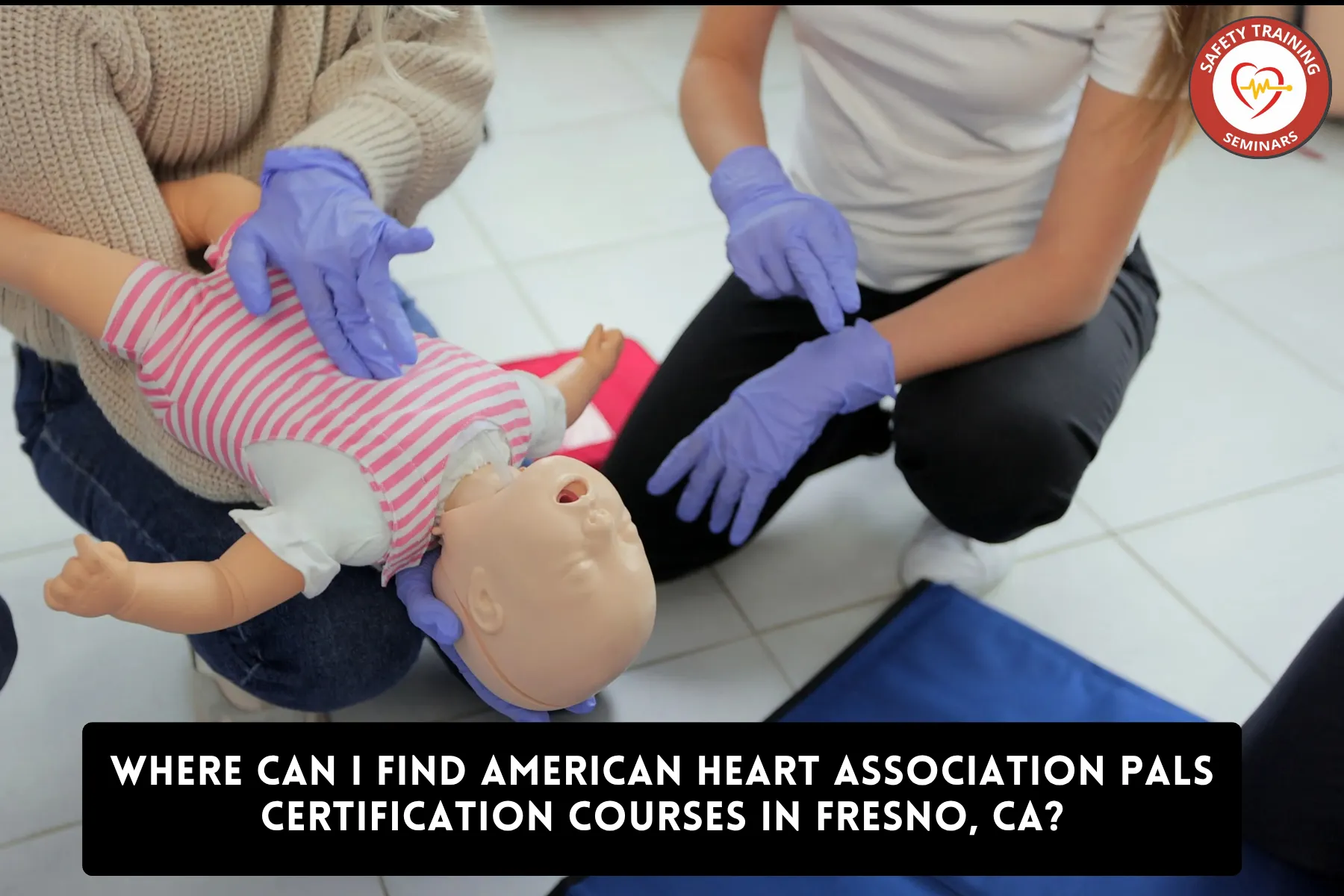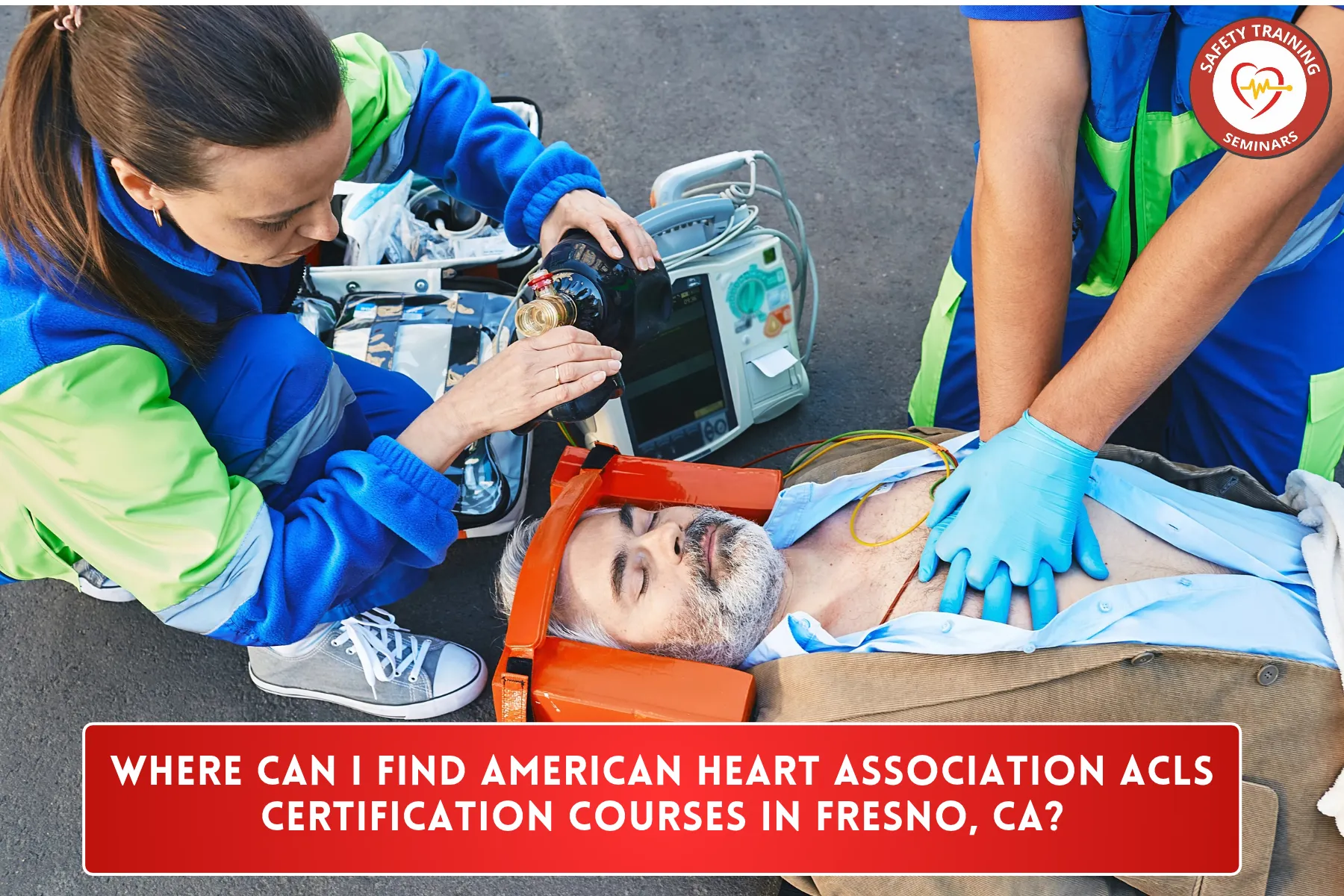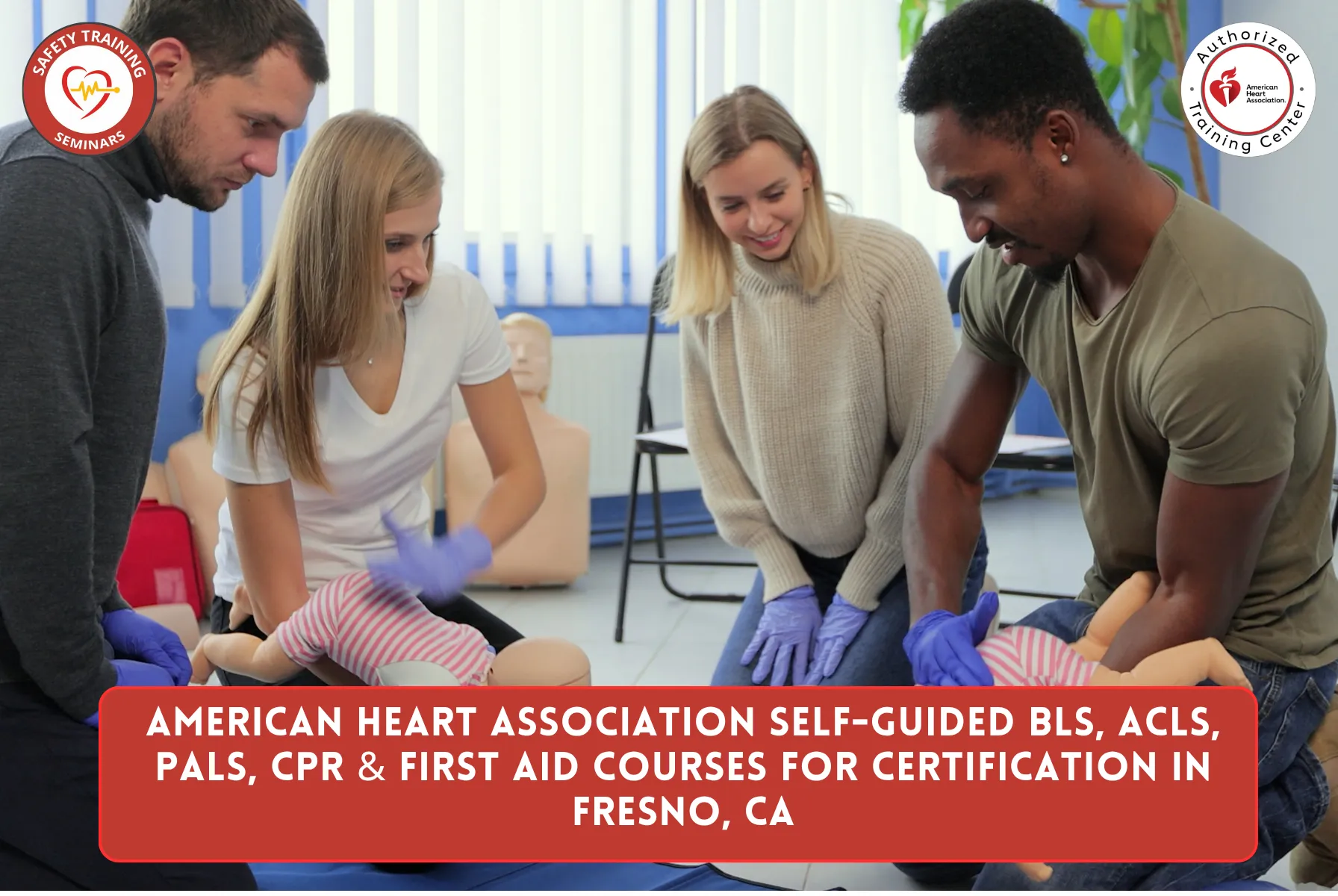
Fresno is the beating heart of California’s Central Valley — a city of nearly 550,000 people that functions as the agricultural, commercial, and healthcare hub for one of the most productive regions on earth. Fresno County stretches from the foothills of the Sierra Nevada to the valley floor, and the clinical professionals who serve it don’t just manage a city population. They anchor a regional healthcare network that reaches into communities across the San Joaquin Valley with no equivalent urban backup nearby. For every nurse, paramedic, and allied health professional working in neighborhoods like Tower District, Woodward Park, and the McLane area, the requirement to maintain current BLS, ACLS, and PALS training isn’t an administrative formality — it’s a foundational professional responsibility that the AHA’s two-year renewal cycle enforces regardless of how demanding their schedules become.
The public health numbers behind that requirement are significant and locally relevant. The American Heart Association estimates that effective bystander CPR can more than double survival rates in cardiac arrest — a statistic that lands with particular weight in a county where chronic disease rates, including cardiovascular conditions, run above state averages in many communities. Clinical professionals at Community Regional Medical Center on Fresno Street, Saint Agnes Medical Center on Herndon Avenue, and Kaiser Permanente Fresno Medical Center carry a patient care burden that extends well beyond typical urban healthcare contexts. Every member of those teams manages a renewal timeline — and in a community as professionally active and geographically expansive as Fresno, the question of which training format actually fits real working lives matters considerably.
This guide compares the two primary formats available for completing BLS, ACLS, and PALS courses in Fresno: traditional instructor-led classroom training and the increasingly preferred Self-Guided Learning™ model paired with CPR Verification Station™ learning centers. Safety Training Seminars supports Fresno’s clinical workforce with access to both formats for BLS, ACLS, PALS, NRP, and First Aid programs, ensuring every professional has a realistic pathway to successfully complete their course and receive an AHA Course Completion eCard on terms that fit their professional life.
Overview of CPR Training Options in Fresno
For healthcare professionals in Fresno and surrounding Fresno County communities like Clovis, Madera, and Visalia, two clearly defined training pathways are available:
• Instructor-Led Training — A fixed-schedule, in-person classroom session led by a course instructor, delivering both cognitive content and hands-on skills practice in a single multi-hour block, typically spanning four to eight hours.
• Self-Guided Learning™ + CPR Verification Stations — A flexible two-part model combining an adaptive online course completed on the learner’s own schedule with a focused, technology-evaluated skills session at a CPR Verification Station™ learning center.
Both satisfy AHA requirements and result in an AHA Course Completion eCard upon successfully completing the course. The practical experience of reaching that outcome, however, differs considerably.
Traditional Instructor-Led CPR Training in Fresno
Instructor-led training has served as the standard format for AHA BLS, ACLS, and PALS programs throughout Fresno County for many years. In this model, participants arrive at a scheduled facility, join a cohort of fellow learners, and work through AHA-approved content under the direct guidance of a course instructor. The session moves from video instruction and live technique demonstration into hands-on skill stations covering chest compressions, airway management, defibrillation protocols, and scenario-based resuscitation exercises appropriate to the program level.
For clinical departments at Community Regional Medical Center or Saint Agnes Medical Center whose employers coordinate on-site group sessions, this format has historically provided a workable structure when institutional logistics manage the scheduling. Healthcare workers commuting between Fresno and facilities in Clovis, Madera, or Visalia have also accessed employer-organized sessions when departmental timing aligns. The complications emerge when individual professionals must independently find and attend a session that fits their availability.
How Instructor-Led Training Works
A standard BLS class in Fresno’s instructor-led format typically runs two and a half to four hours. ACLS courses extend significantly — often six to eight hours — covering advanced cardiac rhythm recognition, pharmacology protocols, complex airway management, and multi-role team resuscitation scenarios. PALS programs follow a comparable timeline focused entirely on pediatric emergency care with age-specific clinical frameworks requiring careful attention throughout. The course instructor observes technique, provides real-time verbal coaching, and confirms that AHA performance standards have been met. When all components are cleared, learners successfully complete the course and receive their AHA Course Completion eCard.
Limitations of Instructor-Led Classes
Fresno’s scale creates specific logistical challenges for the instructor-led format. The city sprawls across a wide footprint, and healthcare professionals in the McLane area or Woodward Park neighborhood may face meaningful commutes to training sites across town during peak hours on Highway 99 or Highway 168. More critically, ACLS and PALS sessions near major Fresno County facilities fill quickly during high-demand renewal periods. A nurse whose compliance window is closing may find every available session within driving distance already booked — leaving waitlisting as the only option when professional deadlines don’t flex. For shift workers managing rotating 12-hour patterns at Community Regional Medical Center, clearing a fixed full day from an unpredictable schedule regularly moves from inconvenient to genuinely impossible.
The Rise of CPR Verification Stations in Fresno
Across Fresno County’s clinical community, the mismatch between the traditional classroom model and the scheduling demands of a large, geographically distributed healthcare workforce has driven meaningful adoption of more flexible training alternatives. CPR Verification Stations represent one of the most significant practical shifts in that evolution — replacing the group-paced, observer-dependent classroom model with a learner-controlled, objectively measured skills verification process that fits how today’s healthcare professionals actually work.
Safety Training Seminars has incorporated CPR Verification Station-based skills evaluation as a core program option for Fresno’s clinical workforce, recognizing that a community as geographically expansive and professionally diverse as this one deserves training solutions built around real professional lives.
What Is a CPR Verification Station?
A CPR Verification Station™ learning center is a precision technology system built around sensor-equipped manikins that capture real-time, granular data on every element of CPR performance. Compression depth, rate, hand placement, full chest recoil, and ventilation timing are all measured continuously and assessed automatically against current AHA performance standards. The result is immediate, objective feedback that doesn’t vary based on who is observing, how large the session is, or any factor outside the learner’s own demonstrated technique. For Fresno’s clinical professionals — many of whom work in environments where measurable performance standards govern patient care — a skills evaluation system built on objective measurement carries natural professional credibility.
How Self-Guided BLS, ACLS, and PALS Courses Work
The online knowledge component of the Self-Guided Learning™ model is delivered through the HeartCode® Complete course — the AHA’s approved digital curriculum for BLS, ACLS, and PALS programs. What distinguishes HeartCode® from a conventional online video module is the intelligent, responsive system at its core: True Adaptive™ learning powered by Area9 Lyceum. This platform continuously tracks how each participant engages with course material and adjusts the learning experience in real time based on demonstrated understanding. An experienced ICU nurse from Fresno’s Woodward Park neighborhood renewing her ACLS program doesn’t sit through foundational rhythm content she applies daily at the bedside — True Adaptive™ learning powered by Area9 Lyceum identifies her existing competency and advances accordingly, directing reinforcement only to the areas where genuine gaps exist. For a newer EMT working through the BLS course for the first time, the platform responds differently — slowing at challenging concepts, revisiting difficult material, and confirming comprehension before each new section opens. Once HeartCode® Complete is finished, the participant schedules a brief skills session at a nearby CPR Verification Station™ location. The AHA Course Completion eCard follows.
Key Advantages of CPR Verification Stations
For healthcare professionals across Fresno and neighboring communities including Clovis, Madera, and Visalia, the practical benefits of this model are concrete and immediately relevant:
• Complete scheduling freedom — The HeartCode® Complete online course can be started, paused, and completed at any time — evenings after shifts, weekend mornings, or distributed across multiple sessions.
• Genuine time efficiency — True Adaptive™ learning powered by Area9 Lyceum removes redundant review for experienced clinicians, meaningfully cutting total course time compared to a full-day classroom program.
• Objective, consistent evaluation — CPR Verification Station™ technology applies standardized AHA performance criteria uniformly, eliminating the variability of human observation across different sessions and instructors.
• Locally accessible — Shorter, more flexibly scheduled skills sessions fit a Fresno professional’s actual weekly calendar far more naturally than a blocked full-day classroom commitment.
Why Healthcare Professionals in Fresno Prefer Self-Guided Learning
The clinical workers living in the Tower District and McLane neighborhoods understand scheduling pressure from the inside out. Many work per diem arrangements across multiple Fresno County facilities, making it essentially impossible to commit to a fixed training date weeks in advance. Others balance rotating shift patterns with family obligations in a community where the cost-of-living pressures of California are felt alongside the healthcare demands of a large, medically underserved regional population. Self-Guided Learning™ courses address those realities directly. A medical assistant rotating between Fresno clinics and Clovis outpatient facilities can complete the BLS program online across several evenings at home in the Woodward Park area, then book a focused skills session at a nearby CPR Verification Station™ location when her schedule permits. A respiratory therapist covering shifts at Community Regional Medical Center can work through the ACLS course during off-hours, completing the hands-on verification at a time that fits his actual week rather than one assigned by a classroom calendar. That’s not a compromise in standards — it’s exactly what modern clinical professional development should look like.
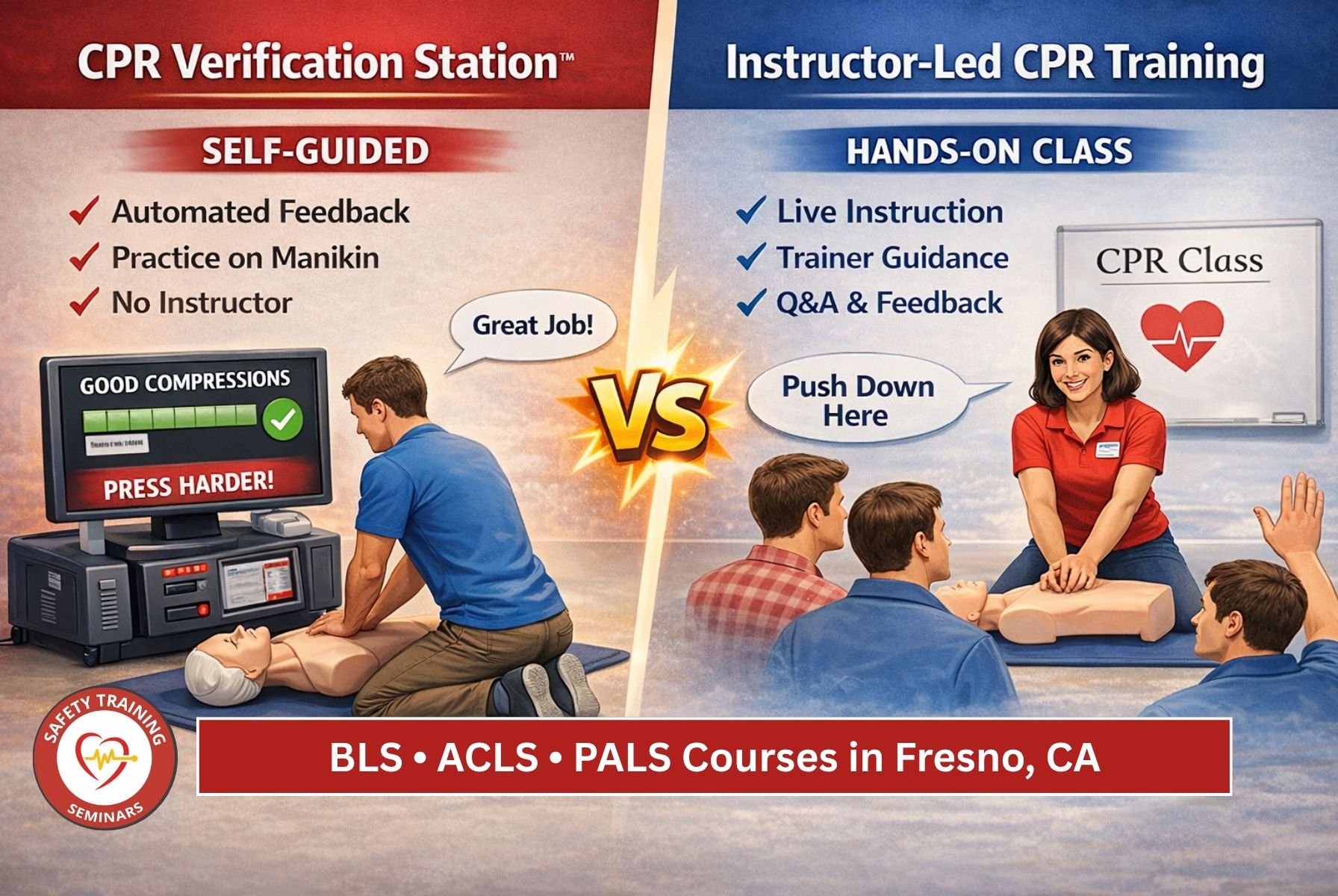
Instructor-Led vs. CPR Verification Stations: Side-by-Side Comparison
Placed directly side by side, these two formats reflect a fundamental difference in design orientation. Instructor-led training is organized around the delivery event — a fixed date, a fixed location, and a shared pace that moves uniformly for every participant regardless of clinical background, experience level, or prior familiarity with the material. That standardization can support some learners in some circumstances. For most working healthcare professionals in a geographically expansive regional hub like Fresno, where training options are more limited than in major metropolitan markets, it creates structural obstacles that a well-designed system shouldn’t impose. Self-Guided Learning™ with CPR Verification Stations is organized entirely around the individual learner. HeartCode® Complete adapts content through True Adaptive™ intelligence, ensuring every portion of the online course adds genuine value rather than filling a predetermined time slot. The CPR Verification Station™ skills session is brief, locally accessible, and evaluated by technology that applies the same consistent AHA standard without variation. On flexibility, time investment, scheduling control, and evaluation consistency, the Self-Guided Learning™ model holds a decisive and practical advantage for Fresno’s working healthcare professionals.
Which Option Is Better for You in Fresno?
Instructor-led training is the right fit if you’re completing an ACLS or PALS program for the very first time and benefit from the structure of a live, trainer-guided group learning environment. Some participants — particularly those working through complex multi-role resuscitation scenarios or pediatric emergency protocols for the first time — find that a course instructor physically present to demonstrate technique and provide real-time verbal feedback builds foundational confidence that’s harder to develop independently. Safety Training Seminars delivers instructor-led sessions with the professional quality and curriculum integrity that Fresno County’s clinical community expects.
Self-Guided Learning™ is the stronger fit if you’re renewing familiar coursework, your schedule rotates unpredictably, or you need an efficient path to completing your BLS class in Fresno, finishing your ACLS program before a compliance deadline, or wrapping up your PALS course without surrendering a full day off. Safety Training Seminars makes this pathway fully accessible through the HeartCode® Complete course paired with CPR Verification Station™ skills evaluation — a combination built around the real constraints of clinical work in the Central Valley.
Local Demand for CPR BLS, ACLS, and PALS Training in Fresno
The clinical renewal pipeline across Fresno County is active and continuous throughout the year. Community Regional Medical Center on Fresno Street — the area’s primary Level I trauma center — maintains active BLS, ACLS, and PALS requirements across its large clinical workforce. Saint Agnes Medical Center on Herndon Avenue and Kaiser Permanente Fresno Medical Center add substantial further volume to the regional renewal demand. Clovis Community Medical Center, serving the growing Clovis corridor, and Valley Children’s Hospital on East Herndon Avenue contribute pediatric-focused PALS renewal demand across their specialized clinical teams. The Fresno Fire Department adds its own contingent of emergency responders to the local AHA renewal pipeline. With two-year renewal cycles running continuously across all of these organizations and a Fresno County population that continues to grow in both size and healthcare complexity, the demand for accessible CPR training near Fresno is consistent, substantial, and uninterrupted throughout the year.
How Safety Training Seminars Supports Modern CPR Training
Safety Training Seminars serves healthcare professionals across Fresno, Clovis, Madera, Visalia, and the broader San Joaquin Valley by offering both instructor-led options and the Self-Guided Learning™ model supported by CPR Verification Station™ learning centers — ensuring every participant has a pathway that genuinely aligns with their schedule and professional experience level. Available programs include BLS, ACLS, PALS, NRP, and First Aid, covering the complete range of AHA training needs across clinical and non-clinical roles. The combination of quality curriculum, genuine scheduling flexibility, and accessible local skills verification has made Safety Training Seminars a trusted resource for healthcare teams throughout the Central Valley — one that understands what Fresno’s working professionals actually need to stay current, stay compliant, and deliver the standard of care their patients deserve.
The Future of CPR Training in Fresno with Safety Training Seminars
Healthcare training is moving consistently in one direction: personalized, technology-integrated learning experiences that adapt to individual professionals and respect the complexity of modern clinical schedules are progressively replacing the one-size-fits-all classroom model as the industry standard. True Adaptive™ learning powered by Area9 Lyceum and CPR Verification Stations represent the leading edge of that shift — and Safety Training Seminars has aligned itself with that direction deliberately. By combining the adaptive intelligence of HeartCode® Complete with accessible CPR Verification Station™ skills evaluation alongside its instructor-led offerings, Safety Training Seminars ensures that Fresno’s healthcare professionals have reliable, efficient, and genuinely flexible access to AHA training that keeps pace with both technological advancement and the real demands of a clinical workforce serving one of California’s most essential regional communities. As Fresno County’s healthcare infrastructure continues to scale, Safety Training Seminars will continue to evolve alongside it.
Start Your BLS, ACLS, or PALS Course in Fresno Today with Safety Training Seminars
Whether you’re completing a BLS course in Fresno for the first time, renewing your ACLS Certification in Fresno before a compliance deadline, or finishing your PALS training between shifts, Safety Training Seminars has a pathway built for your schedule and your professional standards. Healthcare professionals across Fresno County — from Tower District to Woodward Park, from Clovis to Madera — are already completing their AHA training through Safety Training Seminars’ flexible program options, receiving their AHA Course Completion eCard, and returning to clinical roles without the disruption of outdated training models.
The Self-Guided Learning™ path puts the timeline in your hands — complete HeartCode® Complete when it works for you, verify your skills at a CPR Verification Station™ learning center at your convenience, and receive your eCard efficiently. The instructor-led option delivers structured, trainer-guided learning when that’s what your situation calls for. Either way, Safety Training Seminars brings the quality, flexibility, and professional accessibility that Fresno’s healthcare community deserves.
Don’t let a booked-out session or a stretch of consecutive shifts push your renewal into non-compliance. Choose Safety Training Seminars, choose the format that fits your life, and complete your BLS, ACLS, or PALS training in Fresno today.