Choosing between Basic Life Support (BLS) and Advanced Cardiovascular Life Support (ACLS) is one of the most common hurdles healthcare workers, medical students, and clinical staff face in Fresno, CA. While both credentials focus on emergency resuscitation, they cater to vastly different scopes of clinical practice, skill sets, and regulatory mandates. Enrolling in the wrong course can result in rejected onboarding paperwork, wasted hours, and unnecessary out-of-pocket expenses.
The decision comes down to your clinical role, your direct scope of practice, and your employer’s specific compliance mandates. BLS centers on foundational CPR mechanics, high-quality chest compressions, and automated defibrillation for all rescuers. ACLS builds directly upon those foundational skills, introducing advanced airway management, electrocardiogram (ECG) rhythm interpretation, continuous pharmacology, and team leadership during complex cardiac arrests.
Key Takeaway: If you perform basic resuscitation or are entering a foundational healthcare program in Fresno, start with a BLS CPR certification course. If you are a licensed medical professional who manages advanced airways, administers resuscitation drugs, or leads code teams, you will need ACLS—which requires a valid BLS credential as a prerequisite.
Understanding the Scope of Basic Life Support (BLS)
BLS is the foundational emergency cardiovascular care credential required across the healthcare spectrum. The curriculum focuses on prompt recognition of sudden cardiac arrest, immediate high-quality chest compressions, proper ventilation, and early defibrillation.
In a standard BLS course, participants learn:
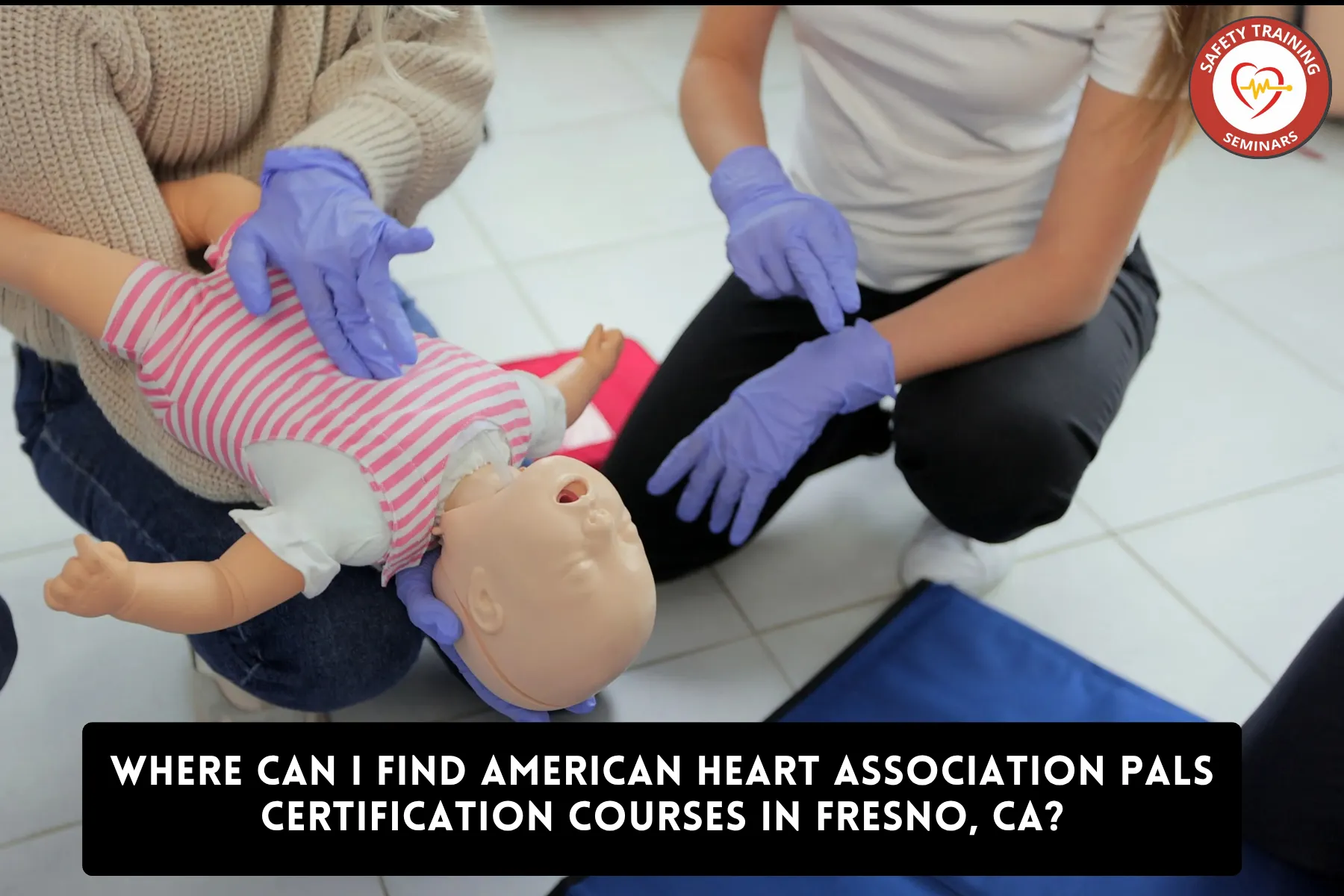
- Single-rescuer and multi-rescuer CPR techniques for adults, children, and infants
- High-performance team dynamics during resuscitation attempts
- Proper operation of an Automated External Defibrillator (AED)
- Bag-valve-mask (BVM) ventilation techniques and barrier device usage
- Relief of foreign-body airway obstructions (choking) in conscious and unconscious victims
BLS emphasizes physical mechanics and rapid, high-quality execution without the use of invasive equipment or medication administration.
Understanding Advanced Cardiovascular Life Support (ACLS)
ACLS extends resuscitation science into advanced medical intervention. Designed for healthcare providers who initiate and direct cardiopulmonary resuscitation, ACLS integrates clinical assessment with systemic medical algorithms.
The ACLS curriculum moves beyond basic mechanics to cover:
- Recognition and immediate management of peri-arrest conditions, including symptomatic bradycardia and tachycardia
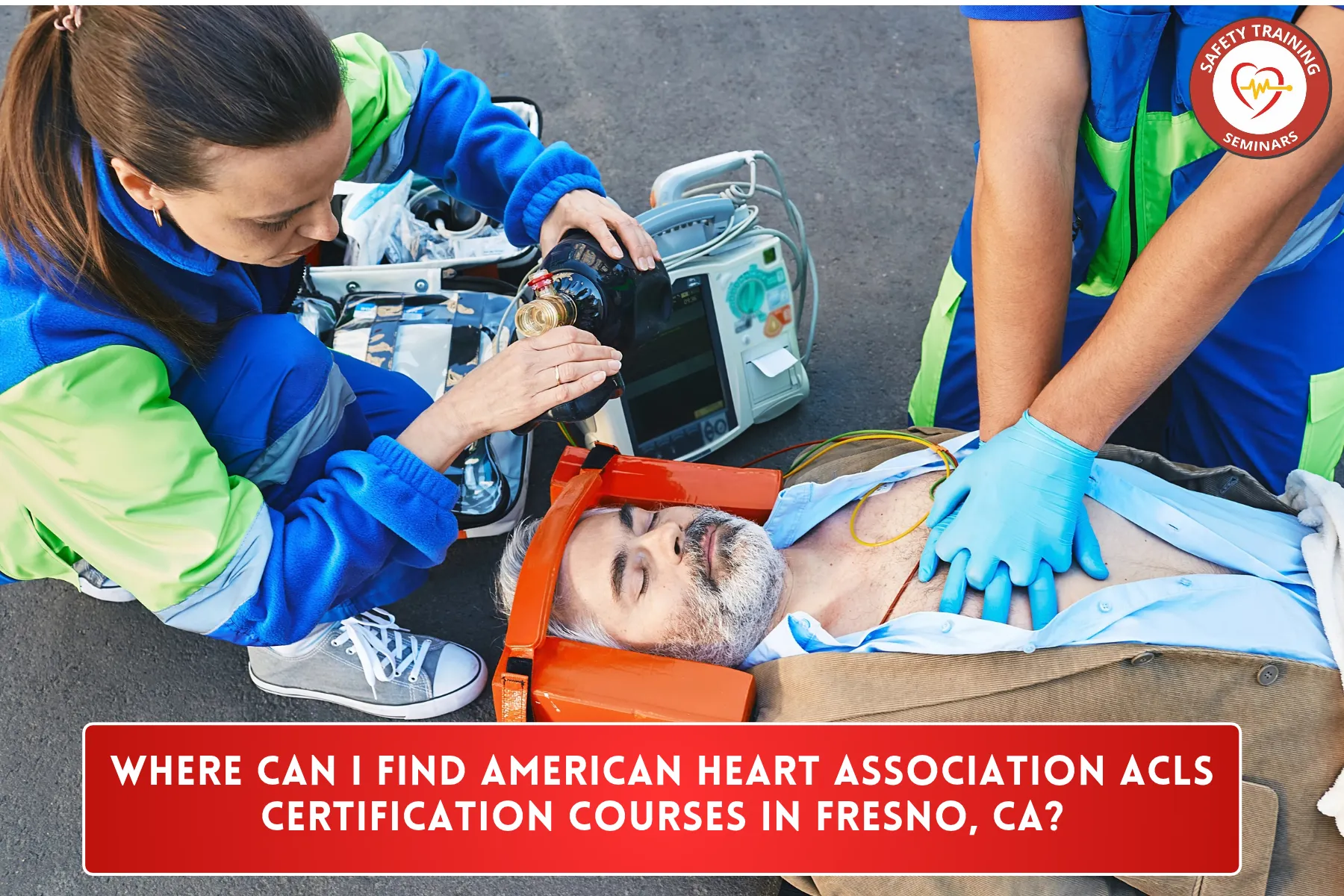
- Advanced airway management, including endotracheal intubation supraglottic airway placement
- ECG rhythm interpretation for lethal cardiac dysrhythmias
- Resuscitation pharmacology, including proper dosing and timing of epinephrine, amiodarone, and atropine
- Acute coronary syndrome (ACS) and acute ischemic stroke emergency protocols
- Effective team leadership and communication dynamics during a code resuscitation
Who Needs BLS vs. Who Needs ACLS in Fresno Workplaces?
Determining which credential you need depends on your clinical setting, your license, and your facility’s specific clinical privileges in the Central Valley.
Clinical Roles That Require BLS
BLS is typically the minimum mandatory credential for healthcare workers who provide direct patient care but do not administer emergency cardiac medications or manage advanced airways. Common roles include:
- Certified Nursing Assistants (CNAs) and Medical Assistants (MAs)
- Dental hygienists and general dental office staff
- Physical therapists, occupational therapists, and radiologic technologists
- Nursing students, medical students, and emergency medical responders
- Inpatient and outpatient healthcare staff in non-critical care units
Clinical Roles That Require ACLS
ACLS is mandatory for advanced providers, emergency personnel, and critical care staff who manage unstable patients or direct resuscitation teams. Common roles include:
- Emergency department physicians, hospitalists, and anesthesiologists
- Registered Nurses (RNs) working in the ICU, Emergency Department, Telemetry, PACU, or Cardiac Cath Lab
- Paramedics and critical care transport teams
- Nurse Practitioners (NPs) and Physician Assistants (PAs) in acute care environments
- Surgical teams and outpatient sedation personnel
If you are unsure which level your department requires, consult your facility’s clinical education coordinator or credentialing office before registering.
Can You Take ACLS Without Holding a BLS Certification?
A frequent point of confusion for medical personnel in Fresno is whether ACLS replaces BLS. It does not. BLS covers fundamental physical rescue skills, whereas ACLS assumes you have already mastered those basic mechanics.
To succeed in an ACLS course, you must demonstrate proficient BLS chest compressions and ventilation at the start of practical testing. Most training centers and healthcare employers require an active BLS card prior to issuing an ACLS provider card.
Many healthcare professionals choose to complete a combined or back-to-back BLS and ACLS training session. This approach satisfies dual credentialing mandates efficiently while ensuring your basic compression and ventilation mechanics are sharp before moving into advanced algorithmic testing.
Comparing the Core Elements of BLS and ACLS
To clarify the structural differences between these two levels of emergency care training, consider how their core elements align:
| Training Element | Basic Life Support (BLS) | Advanced Cardiovascular Life Support (ACLS) |
| Primary Focus | High-quality CPR, AED use, basic airway clearance | Advanced airways, ECG analysis, pharmacology, code leadership |
| Prerequisites | None | Active BLS certification, ECG rhythm recognition skills |
| Airway Equipment | Pocket masks, Bag-Valve-Masks (BVM) | Supraglottic airways, Endotracheal tubes |
| Medications | None | Epinephrine, Amiodarone, Atropine, Adenosine, Vasopressors |
| Testing Format | Physical compression/ventilation skills exam & written test | MegaCode scenario testing, ECG/pharmacology exam, hands-on skill test |
Local Certification Considerations for Fresno and Central Valley Professionals
Healthcare environments across Fresno and the wider San Joaquin Valley operate under rigorous accreditation standards set by hospital systems, county health departments, and state licensing boards. Facilities such as Community Regional Medical Center, Saint Agnes Medical Center, and Valley Children’s Healthcare strictly enforce compliance timelines for emergency certifications.
Students attending nursing or allied health programs at Fresno State, Fresno City College, or local vocational institutes must secure the precise level of certification specified in their clinical onboarding packets. Furthermore, medical commuters traveling into Fresno from surrounding communities such as Sanger and Selma must ensure their certification provider issues an officially recognized credential accepted by regional clinical sites.
When choosing a course, verify that the training format includes a live, in-person skills evaluation. Fully online CPR certificates lacking an in-person, hands-on skills test on physical manikins are routinely rejected by Central Valley hospitals and clinical licensing boards.
Completing Your Training at Safety Training Seminars in Fresno
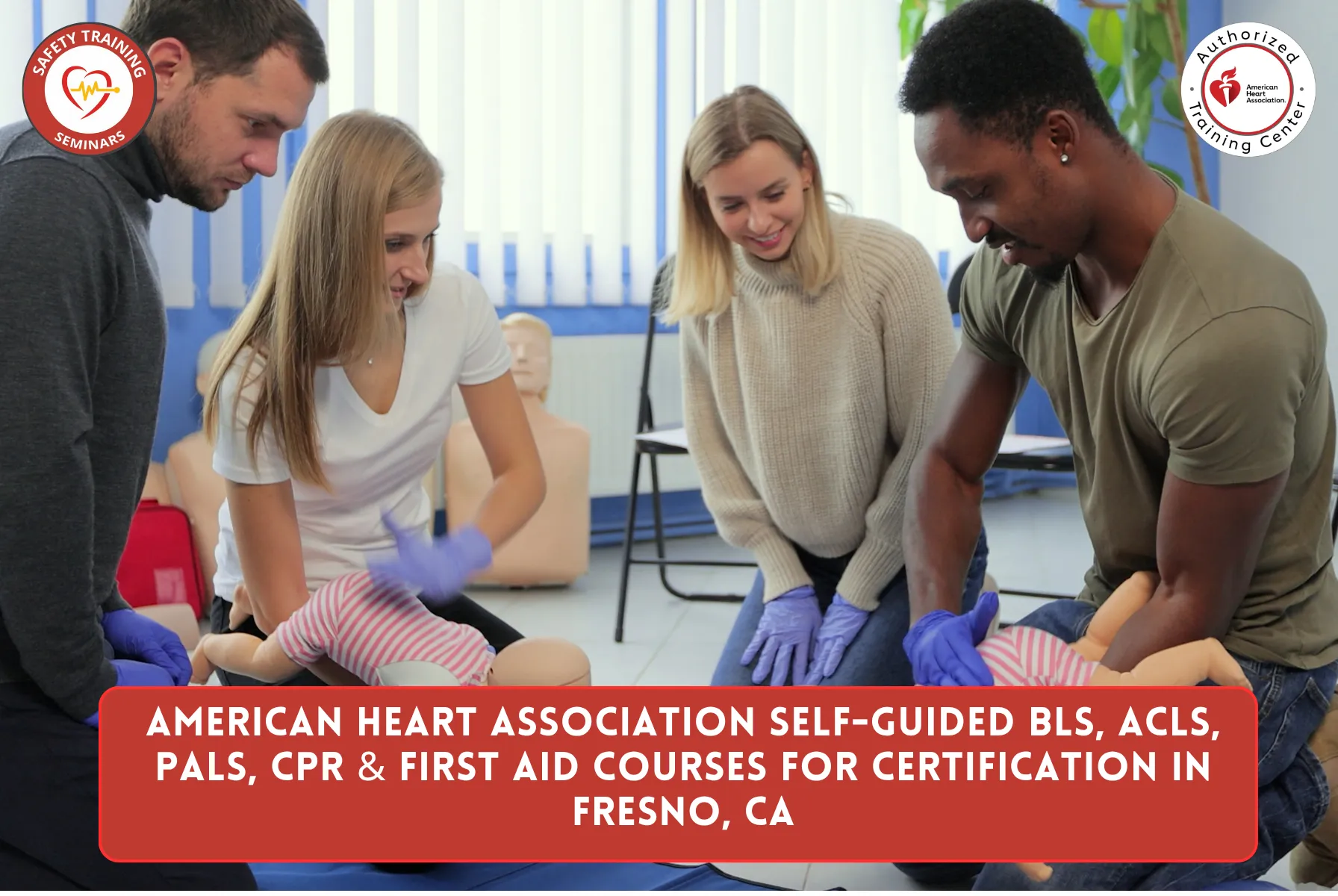
Navigating certification requirements should be straightforward. Safety Training Seminars provides official American Heart Association (AHA) courses designed to help Fresno healthcare workers, students, and workplace personnel meet their exact regulatory requirements.
Classes are conducted locally at the Safety Training Seminars Fresno CPR Training Center Address: 433 E Keats Ave, Suite 4, Fresno, CA 93710. Positioned conveniently near Central Fresno transit corridors, the facility provides easy access for residents throughout the city as well as healthcare staff commuting from neighboring communities.
Prospective students coming from Mendota CA CPR and BLS training locations or searching for Parlier CA emergency course options can easily schedule their required hands-on sessions at this location. Additionally, providers seeking San Joaquin CA ACLS class access or Orange Cove CA certification options can select flexible class times that accommodate demanding hospital shift patterns and clinical rotations.
Frequently Asked Questions
What happens if I register for ACLS but actually needed BLS?
If your employer or school specifically requested BLS, an ACLS card may not satisfy their administrative requirements. BLS validates foundational hands-on CPR mechanics, which some regulatory bodies audit separately. Always confirm the exact course title requested in your onboarding documents.
How long are BLS and ACLS certification cards valid?
Both American Heart Association BLS and ACLS provider credentials are valid for two years through the end of the final month listed on your card. Most employers require recertification prior to the official expiration date to maintain active working privileges.
Is electrocardiogram (ECG) knowledge required before taking ACLS in Fresno?
Yes. ACLS courses require a working knowledge of basic cardiac rhythms, including bradycardias, tachycardias, ventricular fibrillation, and asystole. Reviewing cardiac rhythm strips prior to your ACLS class is strongly recommended to ensure smooth performance during scenario testing.
Are hands-on skill evaluations required for both BLS and ACLS?
Yes. Both BLS and ACLS require direct, physical skill demonstrations overseen by an instructor or evaluated using official feedback equipment. Fully online courses without physical manikin testing do not meet AHA standards or hospital credentialing guidelines.
Taking the Next Step Toward Your Certification
Deciding between BLS and ACLS comes down to identifying your immediate scope of practice and confirming your employer’s specific credentialing rules. If you are entering the medical field or providing foundational care, start with BLS. If you manage advanced care in an emergency, ICU, or surgical setting, select ACLS.
Review your facility or academic onboarding requirements, verify your current card expiration dates, and check class schedules at the Keats Avenue training center in Fresno to reserve your spot.